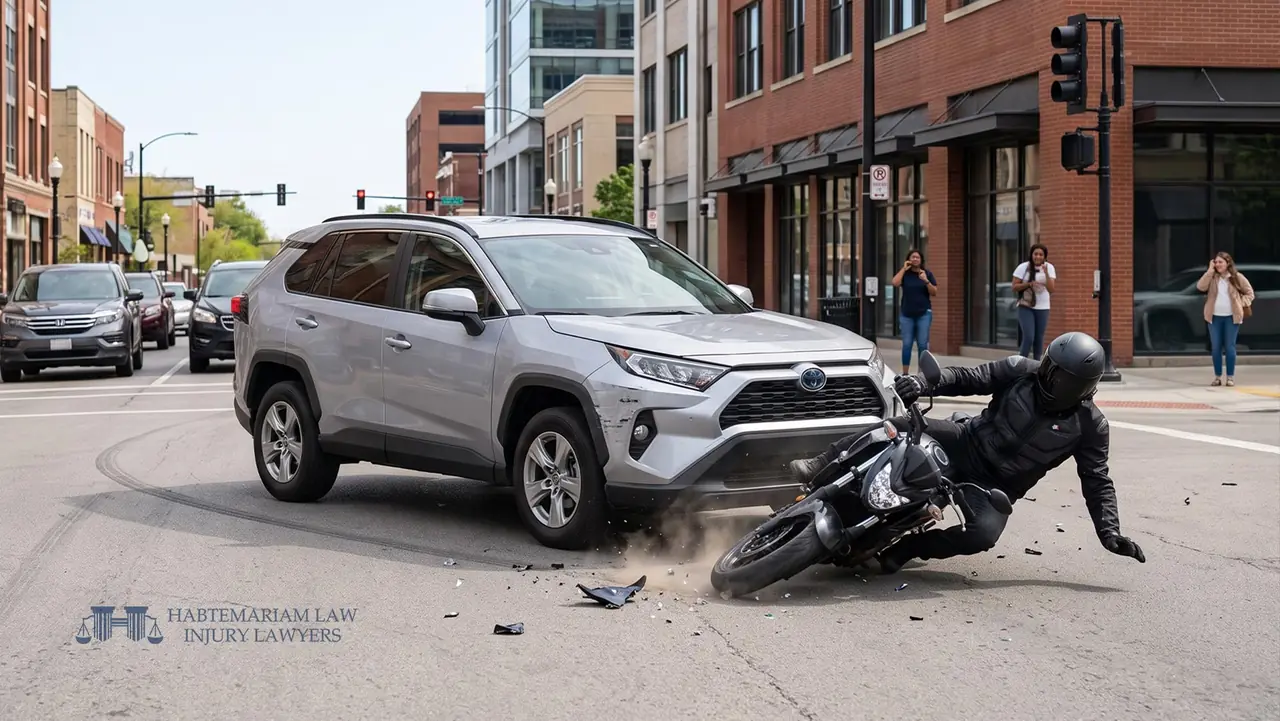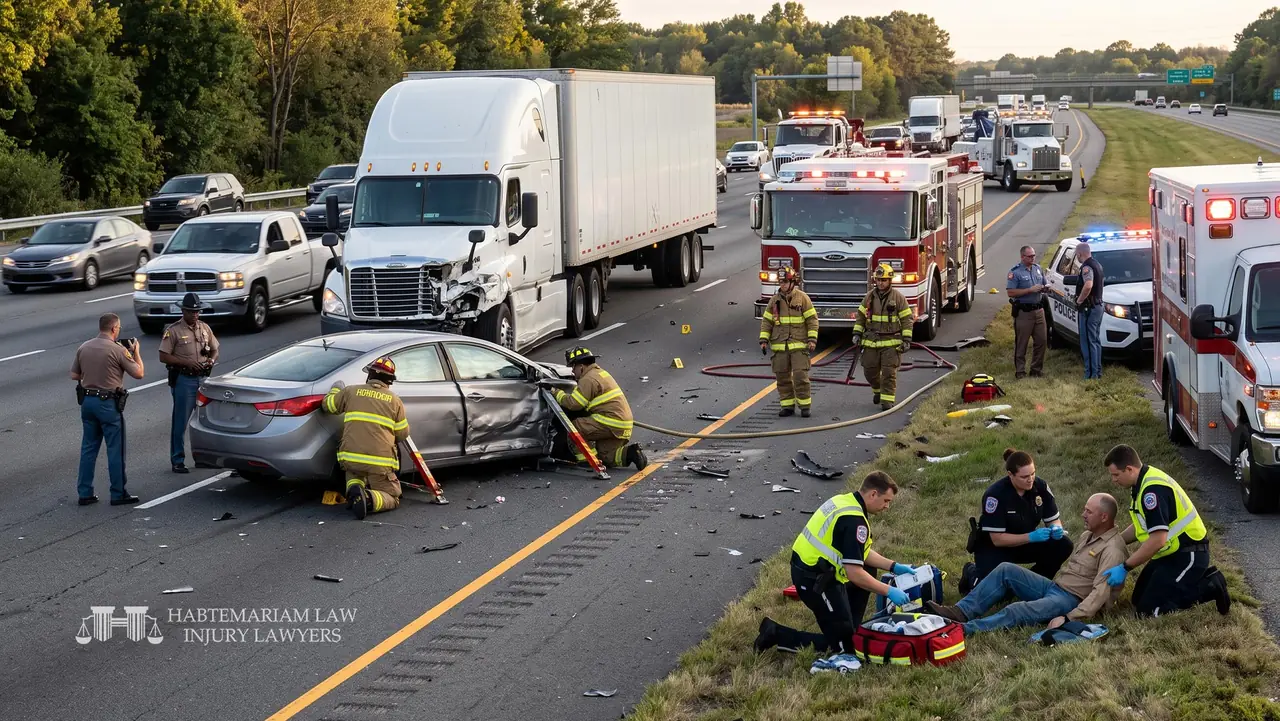


Get to safety and call 911, see a doctor even if you feel fine, document the scene, report the crash and avoid giving a recorded statement to any insurer. Talk to a lawyer early, because deadlines apply and evidence can disappear. [Demo article: placeholder content for design review.]
A car accident leaves you with a lot to handle at once: injuries, a damaged vehicle, calls from insurers and questions about who will pay. What you do in the first hours and days can protect both your health and your claim. This guide walks through the steps in order.
Get to Safety and Call 911#
Move out of traffic if you can do so safely, turn on your hazard lights and check on everyone involved. Call 911 even if the crash seems minor. Emergency services can treat injuries, and a police report becomes important evidence later.
If You Cannot Move#
Stay where you are, keep your seat belt on and wait for responders. Moving with a back or neck injury can make it worse.
See a Doctor, Even If You Feel Fine#
Adrenaline can hide pain. Some injuries, such as whiplash or concussions, do not show symptoms for hours or days. Medical records also create a clear link between the crash and your injuries, which matters for any claim.
- Follow your doctor’s treatment plan and attend every follow-up.
- Keep copies of records, bills and prescriptions.
- Tell every provider the injuries came from a car accident.
Document the Scene#
If you are able, collect as much as you can before details fade.
What to Photograph and Write Down#
- The vehicles, damage, license plates and the surrounding road.
- Traffic signs, signals, skid marks and weather conditions.
- Names, phone numbers and insurance details of the other drivers.
- Contact information for witnesses.
Report the Accident#
Make sure a police report is filed and keep the report number. Notify your own insurance company that the crash happened. You can report the facts without giving a long recorded statement.
Be Careful With the Insurance Companies#
An adjuster may call quickly and sound friendly. Remember that the other side’s insurer works to limit what it pays. Before you give a recorded statement or accept an offer, speak with a lawyer. You can read more about how we handle this on our car accident lawyers page.
Common Mistakes to Avoid#
- Giving a recorded statement without legal advice.
- Accepting the first settlement offer before you know the full extent of your injuries.
- Posting about the crash or your injuries on social media.
- Skipping medical appointments.
Know the Deadlines#
Every state sets a deadline, called a statute of limitations, for filing a lawsuit. In Washington it is generally three years for personal injury claims, but exceptions can shorten or extend that time. Claims against a government entity often have much shorter notice requirements. Do not wait to ask.
Talk to a Car Accident Lawyer#
An early consultation helps you protect evidence, understand your options and avoid costly mistakes. At Habtemariam Law the consultation is free, and we charge no attorney’s fees unless we recover compensation for you. If you were hurt in a crash, you can learn about personal injury claims or contact our team today.
Frequently Asked Questions#
Should I call the police for a minor accident?#
In most cases, yes. A police report documents what happened and can be useful if injuries show up later.
What if the other driver has no insurance?#
You may have options through your own uninsured or underinsured motorist coverage. A lawyer can review your policy and the circumstances.
This article is general information, not legal advice. Contact us for a free case review about your situation.

Luis Alvidrez
Attorney · Habtemariam LawLuis is an attorney at Habtemariam Law who helps people hurt in accidents understand their rights and options. [Placeholder bio: replace with the real author bio.]
View profile →